

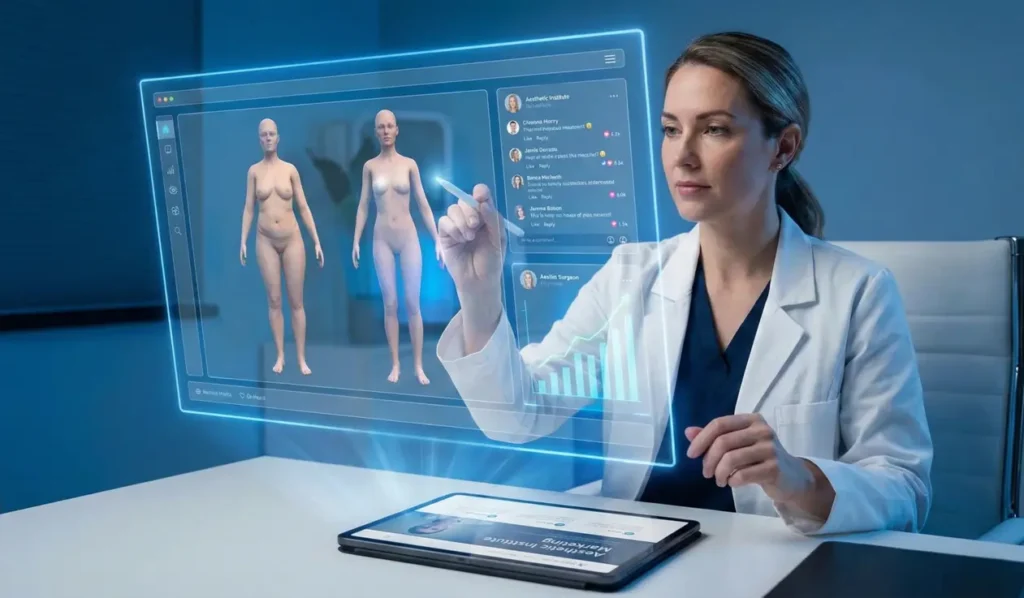
Digital marketing for plastic surgery clinics in 2026 feels broken because clinics are doing everything right, yet attracting the wrong patients. Ads bring enquiries and content gets views. Social media also looks active but still, conversions feel fragile.
That’s not a traffic problem. It’s a trust problem. Plastic surgery patients don’t decide fast. They observe, compare, and judge quietly. Long before a form is filled, they have already decided who feels safe and who does not. Most clinics miss this phase entirely.
In 2026, digital marketing for plastic surgery clinics works only when it controls the full online ecosystem, search, website, content, reviews, and social signals, not as channels, but as reassurance tools. This article focuses on exactly that. Real digital marketing strategies that help clinics shape patient confidence, not chase attention.
Because in this niche, attention doesn’t convert, certainty does.
Why Digital Marketing for Plastic Surgery Clinics Stopped Working in 2026
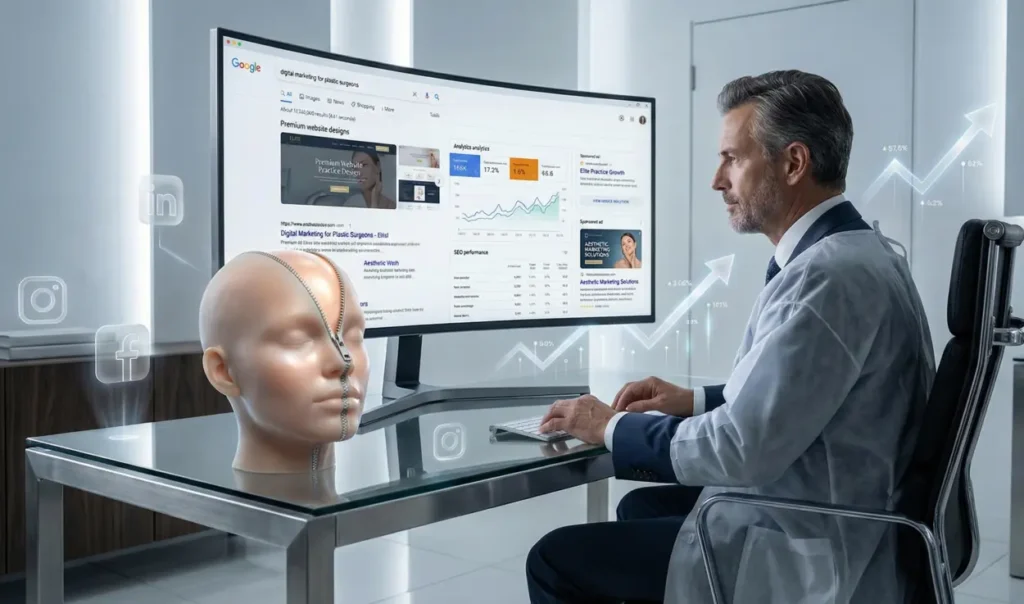
Digital marketing for plastic surgery clinics feels broken in 2026 because clinics are optimizing for noise, while patients are filtering for trust. Plastic surgery patients do not respond to visibility alone. They respond to reassurance. When websites rush them, ads push urgency, or content feels sales-driven, hesitation increases instead of confidence.
The biggest mistake clinics made was assuming more exposure would solve doubt. It didn’t. It amplified skepticism. In 2026, patients don’t ask which clinic is popular. They ask which clinic feels safe to choose. That shift is why old digital marketing systems stopped converting.
How Plastic Surgery Patients Actually Decide in 2026

Plastic surgery patients do not decide after seeing an ad. They decide after repeated exposure that feels calm, consistent, and credible.
In 2026, most decisions happen silently. Patients compare tone, language, and transparency before they ever compare prices. They notice how risks are explained, what is avoided and if a clinic educates or only promotes.
Confidence builds in layers, not moments.
Digital marketing strategies for plastic surgery clinics works only when every touchpoint answers one question clearly: Can I trust this clinic with something permanent? If that answer feels uncertain even once, patients move on without saying a word.
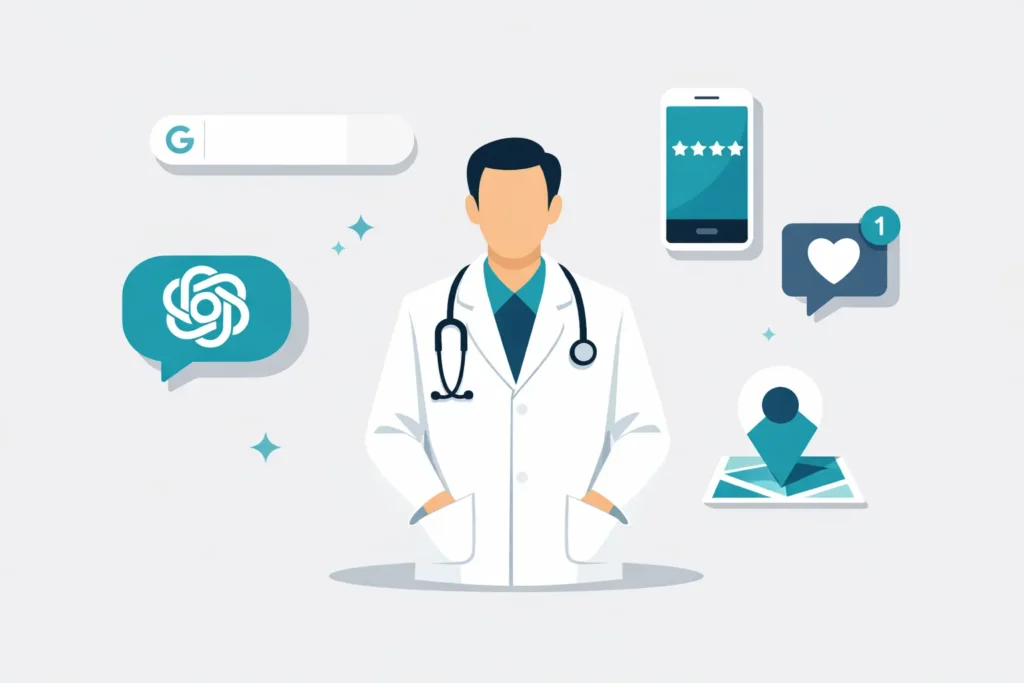
The New Digital Marketing Ecosystem Plastic Surgery Clinics Need
In 2026, digital marketing for plastic surgery clinics is effective only when the entire online presence is designed around one outcome: reducing patient doubt before contact.
Here is what that ecosystem actually looks like in practice.
- Search presence must answer intent-based queries, not just rank for procedures
- Website structure should guide patients through risks, outcomes, and credibility in a fixed order
- Content strategy must address hesitation points, not just showcase results
- Social media should reinforce expertise through explanation, not promotion
- Reviews and credentials must highlight decision confidence, not popularity
Each element supports the next. When one is weak, patients feel it immediately. Strong clinics do not chase attention. They control the decision environment.
This is the difference between digital activity and digital strategy. That alignment is what converts hesitation into confidence.
What Actually Replaces Traditional Lead Generation in 2026
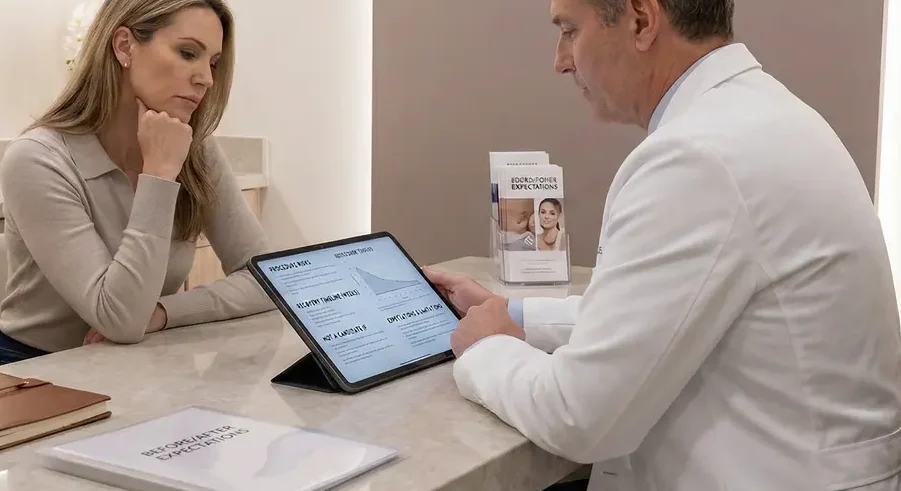
Traditional lead generation breaks in plastic surgery because it asks patients to act before they feel ready. In 2026, digital marketing for plastic surgery clinics works better when clinics design for decision flow, not form fills.
Here is what replaces the old lead-first mindset:
- Decision-path content that answers doubts in sequence, not randomly
- High-intent pages built for people already considering surgery, not browsing
- Soft conversion points like detailed guides, recovery explanations, and surgeon philosophy pages
- Follow-up ecosystems that educate instead of pushing appointments
The goal is not more leads but fewer, clearer and better-prepared enquiries. Clinics that shift to this model spend less time qualifying patients and more time consulting serious ones. That is where digital marketing for plastic surgery clinics actually starts producing stable results in 2026.
The Role of Content in Digital Marketing for Plastic Surgery Clinics
In 2026, content in digital marketing for plastic surgery clinics is not meant to attract curiosity. It is meant to remove hesitation.
Most clinics still post what looks impressive. What actually works is posting what answers unspoken doubts.
- Procedure content should explain who is not a good candidate
- Risk and recovery content should be specific, not reassuringly vague
- Surgeon-led explanations should show judgment, not just outcomes
- Educational pages should mirror real consultation conversations
Before-after images still matter, but only when they are framed with context, expectations, and limitations. Content that skips those elements feels incomplete and triggers skepticism. Strong content does one thing consistently – It prepares patients so the consultation feels like a continuation, not a starting point.
That is why content is not a marketing asset anymore. It is a trust filter.
Trust Signals That Quietly Influence Patient Choice
In building online marketing for plastic surgery clinics, trust is built in places clinics rarely optimize. Patients notice signals that are subtle but decisive.
Here are the ones that actually influence choice in 2026:
- Review depth over volume: Patients trust detailed experiences more than five-star counts.
- Consistency across platforms: Mismatch between website tone, social content, and reviews raises doubt.
- Credentials explained, not just listed: Patients want to understand what makes your expertise reliable.
- Transparency in language: Clinics that acknowledge limitations feel more credible than those promising perfection.
These signals work quietly. They do not increase clicks overnight, reduce hesitation steadily. And in plastic surgery, reduced hesitation is what converts.
The Data Clinics Ignore But Google Doesn’t
Digital marketing for plastic surgery clinics often fails because clinics rely on assumptions, not behaviour data. Google doesn’t. According to PwC Health Research Institute, over 80% of patients research online before choosing a healthcare provider, and for elective or self-paid procedures, the research phase is significantly longer and more comparison-driven.
What this means in practice:
- Patients spend time evaluating credibility, not just services
- Search behaviour shows intent long before enquiries appear
- Clinics that educate early stay top-of-mind later
Google rewards clinics that satisfy this research behaviour with better visibility and trust signals. Clinics that push conversion too early lose both attention and rankings. If your digital presence does not support how patients actually research, no amount of optimisation will fix the drop-off.
How Digital Marketing Agencies Should Actually Serve Plastic Surgeons
In 2026, digital marketing for plastic surgery clinics fails when agencies act like execution vendors instead of strategic partners. Posting content, running ads, and sending reports is not strategy. It’s activity.
What plastic surgeons actually need is decision architecture.
Here’s what a competent agency should do differently.
- Design the patient decision journey, not just campaigns
- Sequence information so risk, recovery, and outcomes appear at the right time
- Build content frameworks that mirror real consultations
- Protect brand tone across ads, website, and social so nothing feels contradictory
- Measure trust signals, not just clicks and leads
Agencies that only optimise for cost per lead push clinics into volume problems. Agencies that understand plastic surgery optimise for clarity, confidence, and patient readiness. That distinction decides whether marketing feels exhausting or sustainable.
What “Fixing” Digital Marketing for Plastic Surgery Clinics Really Means
Fixing digital marketing for plastic surgery clinics in 2026 does not mean adding new tools or switching platforms. It means correcting priorities. Clinics that win stop asking how to get more leads. They start asking how patients form confidence online, that shift changes everything.
- Marketing moves from promotion to explanation
- Content moves from attraction to preparation
- Ads support clarity instead of forcing action
- Websites guide decisions instead of chasing clicks
This approach feels slower at first with fewer enquiries and longer decision cycles. But the quality improves quickly. Consultations feel easier and drop-offs reduce which ultimately makes the trust compounds.
Ready to Rebuild How Patients See Your Clinic Online?
Digital marketing for plastic surgery clinics in 2026 needs more than activity. It needs direction. When search, content, trust signals, and messaging work as one system, patient decisions become easier and clinics stop chasing outcomes.
At RankVed, this is exactly how we approach digital strategy for high-consideration medical niches. Not as campaigns and shortcuts. But as a structured online ecosystem built around how patients actually think, research, and decide.
If your clinic is serious about improving patient quality, reducing uncertainty before consultations, and building long-term credibility online, then the strategy has to change before the tools do.